
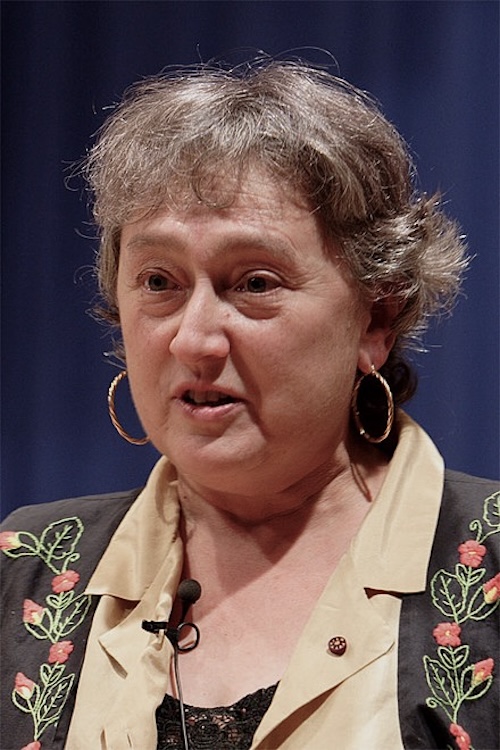
Lynn Margulis (1938-2011) was an American evolutionary biologist whose endosymbiotic theory proposed that complex cells arose through symbiotic mergers of simpler organisms. Her work emphasized cooperation and symbiosis as drivers of evolutionary innovation alongside competition.
Margulis proposed her theory in 1967, suggesting that complex cells with nuclei (eukaryotes) arose through symbiotic mergers of simpler bacterial cells. Her hypothesis that mitochondria and chloroplasts were once independent bacteria that became incorporated into larger cells faced initial resistance. Her paper “On the Origin of Mitosing Cells” was rejected by fifteen journals before publication. One grant application received the response: “Your research is crap.”
The theory gained acceptance by the 1980s after genetic evidence supported her claims. Ernst Mayr described the evolution of nucleated cells as “perhaps the most important and dramatic event in the history of life.” Margulis’s work suggested that this development resulted from cooperative mergers rather than solely competitive selection, reframing evolutionary biology’s emphasis on competition.
Margulis collaborated with James Lovelock throughout the 1970s to develop the Gaia hypothesis, which proposes that Earth functions as a self-regulating system through interactions between living organisms and their environment. She contributed biological expertise to Lovelock’s geochemical insights, examining how microbial processes influence planetary conditions.
She advocated for Robert Whittaker’s five kingdom classification of life, promoting recognition of microbial diversity. Her research emphasized that bacteria cooperate and exchange genetic material, challenging views of microorganisms as isolated competitors.
Margulis received election to the US National Academy of Sciences (1983), the National Medal of Science (1999), and the Darwin-Wallace Medal from the Linnean Society (2008). She published extensively with her son, science writer Dorion Sagan, making her research accessible to wider audiences.
Key Concepts
- Endosymbiotic Theory (1967): Complex cells arose through symbiotic mergers of simpler organisms
- Symbiosis in Evolution: Cooperation and merger as drivers of evolutionary innovation
- Gaia Hypothesis: Earth as self-regulating system (co-developed with James Lovelock, 1970s)
- Five Kingdoms: Classification recognizing diversity of microbial life
- Microbial Cooperation: Bacteria cooperate and exchange genetic material
Essential Works
- “Origin of Eukaryotic Cells” (Yale University Press, 1970) - ISBN 0-300-01353-1
- “Microcosmos: Four Billion Years of Evolution from Our Microbial Ancestors” (HarperCollins, 1987) - ISBN 0-04-570015-X - With Dorion Sagan
- “Symbiosis as a Source of Evolutionary Innovation” (MIT Press, 1991) - ISBN 0-262-13269-9 - Editor
- “Symbiotic Planet: A New Look at Evolution” (Basic Books, 1998) - ISBN 978-0-465-07272-1
- “Acquiring Genomes: A Theory of the Origin of Species” (Basic Books, 2002) - ISBN 978-0-465-04391-6 - With Dorion Sagan
Further Reading
Biographical Sources
- Wikipedia: Lynn Margulis
- National Academy of Sciences Biographical Memoir
Key Books
- Origin of Eukaryotic Cells (Yale University Press, 1970) - ISBN 0-300-01353-1
- Microcosmos with Dorion Sagan (HarperCollins, 1987) - ISBN 0-04-570015-X
- Symbiotic Planet (Basic Books, 1998) - ISBN 978-0-465-07272-1
- Acquiring Genomes with Dorion Sagan (Basic Books, 2002) - ISBN 978-0-465-04391-6
Scientific Papers
- “On the Origin of Mitosing Cells” (1967)
Related Resources
- Collaboration with James Lovelock on Gaia hypothesis
- Work with Dorion Sagan on science writing