Gaia is a very simple idea: that the Earth works as a single, complex, self-regulating system.
“Gaia is a very simple idea: that the Earth works as a single, complex, self-regulating system.” — James Lovelock
deep ecology
practices for awakening and resilience in a changing world
“Gaia is a very simple idea: that the Earth works as a single, complex, self-regulating system.” — James Lovelock
“Humanity is not separate from Gaia; we are a part of her body. To harm her is to harm ourselves.” — James Lovelock
“Our task is not to save the Earth. She will endure. It is our civilization, our children, who are at risk.” — James Lovelock
“The Gaia hypothesis tells us that life and the Earth are inseparable, two sides of one great process.” — James Lovelock
“The planet we abuse will find ways to restore balance, but not necessarily in ways that are kind to us.” — James Lovelock
“We are part of Gaia’s experiment. Whether we remain part of her future depends on how we live now.” — James Lovelock
“We have to accept that we are modest parts of the functioning of Earth, not its masters.” — James Lovelock
“We need to see ourselves not as stewards of nature, but as participants in a vast, living system.” — James Lovelock
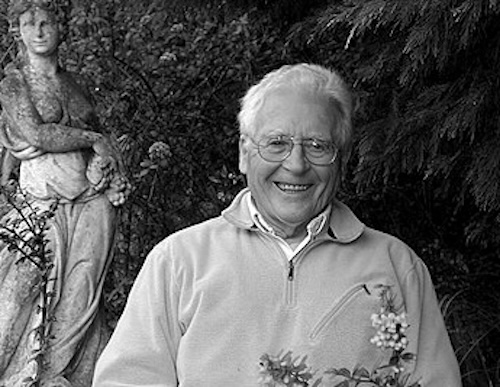
James Ephraim Lovelock (1919-2022) was an independent scientist who formulated the Gaia hypothesis in the early 1970s. Working outside academic institutions, he proposed that Earth functions as a …
Lynn Margulis (1938-2011) was an American evolutionary biologist whose endosymbiotic theory proposed that complex cells arose through symbiotic mergers of simpler organisms. Her work emphasized …