Article: “Ecophilosophy as a Way of Life” — Freya Mathews
Freya Mathews (Adjunct Professor of Environmental Philosophy, La Trobe University) published “Ecophilosophy as a Way of Life” in The Trumpeter: Journal of Ecosophy, Vol. 39, No. 1 (2023). …

deep ecology
practices for awakening and resilience in a changing world
Freya Mathews (Adjunct Professor of Environmental Philosophy, La Trobe University) published “Ecophilosophy as a Way of Life” in The Trumpeter: Journal of Ecosophy, Vol. 39, No. 1 (2023). …
“There are solutions to the major problems of our time; some of them even simple. But they require a radical shift in our perceptions, our thinking, our values. And, indeed, we are now at the …
All noble things are as difficult as they are rare.
All things in nature proceed from certain necessity and with the utmost perfection.
As a poet I hold the most archaic values on earth. They go back to the late Paleolithic: the fertility of the soil, the magic of animals, the power-vision in solitude, the terrifying initiation and …
Deep ecology is not just an intellectual movement, it’s a way of being in the world.
Ecosophy begins with experiencing ourselves as part of nature, not separate from it.
God and Nature are one and the same.
Humans have no right to reduce this richness and diversity except to satisfy vital needs.
I have made a ceaseless effort not to ridicule, not to bewail, not to scorn human actions, but to understand them.
Man is not situated in nature as a kingdom within a kingdom, but as a part of the whole.
Peace is not an absence of war, it is a virtue, a state of mind, a disposition for benevolence, confidence, justice.
Present human interference with the nonhuman world is excessive, and the situation is rapidly worsening.
Richness and diversity of life forms contribute to the realization of these values and are also values in themselves.
That land is a community is the basic concept of ecology, but that land is to be loved and respected is an extension of ethics.
The ecological crisis is fundamentally a crisis of consciousness and values.
The highest activity a human being can attain is learning for understanding, because to understand is to be free.
The ideological change is mainly that of appreciating life quality rather than adhering to an increasingly higher standard of living.
The more we understand individual things, the more we understand God.
The well-being and flourishing of human and nonhuman Life on Earth have value in themselves. These values are independent of the usefulness of the non-human world for human purposes.
This book is an attempt at codifying a scattered body of ecological insight into a philosophy that places human beings on an absolutely equal footing with all other creatures on the planet.
Those who subscribe to the foregoing points have an obligation directly or indirectly to participate in the attempt to implement the necessary changes.
We may not need a new ecological philosophy, but need to reawaken something very old, to reawaken our understanding of Earth wisdom.
We need philosophy that connects head and heart, intellect and intuition, theory and practice.
Wildness calls us back to our ecological selves, reminding us who we really are.
Whenever philosophers and scientists have tried to explain how life evolved, they have made the same mistake: they’ve assumed that the environment was fixed and that the organisms simply …
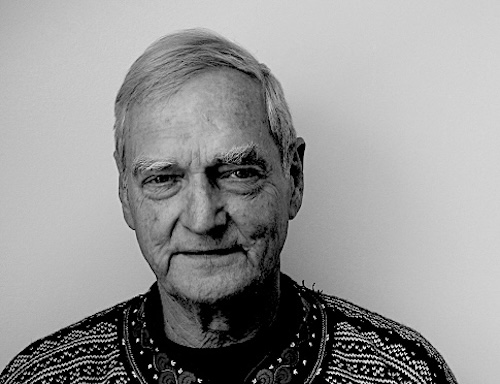
Alan Drengson (1934-2022) was a Canadian philosopher and educator who served as close collaborator with Arne Naess and founding editor of The Trumpeter journal, becoming a key voice in articulating …

George Sessions (1938-2016) was an American philosopher who co-developed the Deep Ecology Platform with Arne Naess. He taught philosophy at Sierra College in Rocklin, California for nearly fifty …

Baruch Spinoza (1632-1677) was a Dutch philosopher whose pantheistic philosophy influenced Arne Naess’s development of deep ecology. Writing in the 17th century, Spinoza proposed a monistic …

Bayo Akomolafe is a Nigerian psychologist, author, and philosopher who offers decolonial perspectives on mental health, spirituality, and environmental activism. Trained in Western psychology but …

Val Plumwood was an Australian ecofeminist philosopher whose rigorous critique of dualism revealed how Western philosophy’s hierarchical separation of reason from nature, mind from body, and …

Francisco Varela (1946-2001) was a Chilean biologist, philosopher, and cognitive scientist who developed theories of autopoiesis and enactive cognition. His work integrated biological research with …
“All living beings have intrinsic value.” – Arne Naess
“Deep ecology asks for a radical rethinking of values, not only technology.” – Arne Naess
“Identification, not moralizing, often leads to beautiful actions.” – Arne Naess
“Self-realization means widening the self: identification with a larger Self.” – Arne Naess
“The ultimate aims of deep ecology can be summarized in a simple imperative: maximize self-realization! In other words, maximize our potential as living beings. We need beings to awaken.” …
“Deep ecology looks at the spiritual disease that underlies the environmental crisis: the illusion of separation between humans and the rest of the natural world… In order to nourish our …

Ailton Krenak (born 1953) is a Brazilian indigenous intellectual, environmental activist, and leader of the Krenak people of Minas Gerais. He advocates for indigenous rights, environmental …
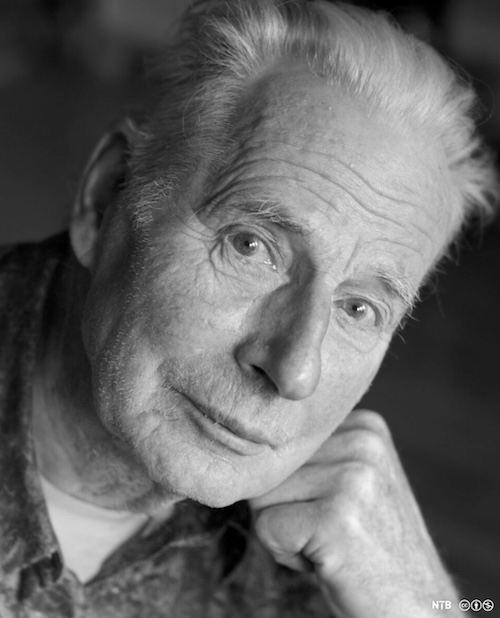
Arne Naess was a Norwegian philosopher who coined the term “deep ecology” in 1973, fundamentally reshaping environmental thought and activism. Born in Oslo in 1912, he became …
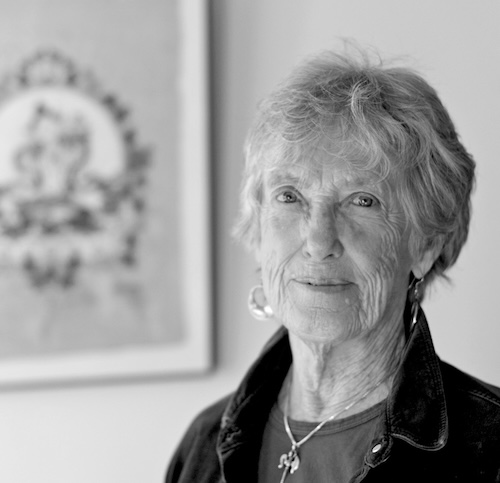
Joanna Macy (1929-2025) was a scholar of Buddhism, general systems theory, and deep ecology. Born in Los Angeles, she earned her PhD and spent five decades developing the Work That Reconnects, a …
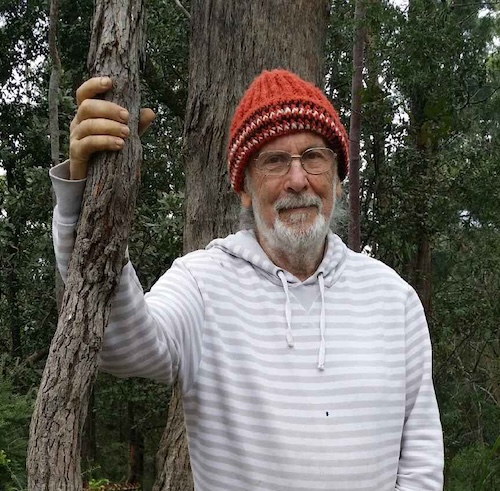
John Seed is an Australian environmental activist who co-created the Council of All Beings practice and founded the Rainforest Information Centre. His work connects direct action rainforest …
“The smaller one comes to feel compared to the mountain, the nearer one comes to sharing in its greatness. I don’t know why this is so.” - Arne Naess —
“Care flows naturally if the self is widened and deepened so that protection of free nature is felt and conceived of as protection of our very selves.” - Arne Naess —
“All life is interdependent; we cannot survive without the web of relationships that sustain us.” – Joanna Macy Source: Coming Back to Life, 1998
https://youtu.be/QPdxrrg_Frw “Deep ecology is a key to the change we need. To deep ecology, underlying all the symptoms of the environmental crisis lies a psychological or spiritual root – the …
For a transcript of this informative interview see below: [https://www.context.org/iclib/ic22/zimmrman/] A philosophy is, among other things, a system of thought that governs conduct. But in the …
“As if this simplicity and inaccessibility were not enough, Næss built, with his own hands, a three-by-three-meter refuge some 200 meters higher up on the crags of the Hallingskarvet massif, …
In April 1984, during the advent of Spring and John Muir’s birthday, George Sessions and Arne Næss summarized fifteen years of thinking on the principles of deep ecology while camping in Death Valley, …

https://www.youtube.com/watch?v=Wf3cXTAqS2M For a full transcript of the Interview with Arne Naess in this documentary visit: http://www.naturearteducation.org/R/Interviews/Naess1.htm