Eating is an agricultural act.
Eating is an agricultural act.

deep ecology
practices for awakening and resilience in a changing world
Eating is an agricultural act.
It may be that when we no longer know what to do we have come to our real work, and that when we no longer know which way to go we have come to our real journey. The mind that is not baffled is not …
Love the quick profit, the annual raise, vacation with pay. Want more of everything ready-made. Be afraid to know your neighbors and to die.
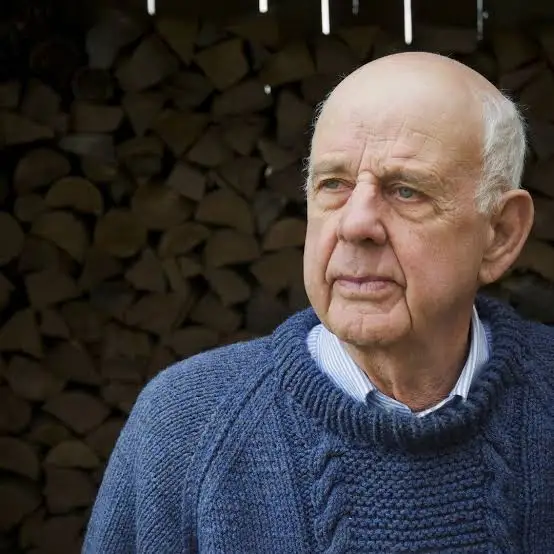
Wendell Berry (1934-2026) was an American novelist, poet, essayist, environmental activist and farmer whose agrarian philosophy of “the care of the earth” placed sustained attention to …
The care of the earth is our most ancient and most worthy, and after all our most pleasing responsibility.
The earth is what we all have in common.
There are, it seems, two muses: the Muse of Inspiration, who gives us inarticulate visions and desires, and the Muse of Realization, who returns again and again to say, “It is yet more …
We are living in the most destructive and, hence, the most stupid period of the history of our species.
What I stand for is what I stand on.
When despair for the world grows in me and I wake in the night at the least sound in fear of what my life and my children’s lives may be, I go and lie down where the wood drake rests in his …
A land ethic changes the role of Homo sapiens from conqueror of the land-community to plain member and citizen of it.
A thing is right when it tends to preserve the integrity, stability, and beauty of the biotic community. It is wrong when it tends otherwise.
Ability to see the cultural value of wilderness boils down, in the last analysis, to a question of intellectual humility.
As a poet I hold the most archaic values on earth. They go back to the late Paleolithic: the fertility of the soil, the magic of animals, the power-vision in solitude, the terrifying initiation and …
Conservation is a state of harmony between men and land.
Find your place on the planet. Dig in, and take responsibility from there.
Future generations are unlikely to condone our lack of prudent concern for the integrity of the natural world that supports all life.
If we are living so intimately with chemicals—eating and drinking them, taking them into the very marrow of our bones—we had better know something about their power.
In every outthrust headland, in every curving beach, in every grain of sand there is the story of the earth.
Man’s attitude toward nature is today critically important simply because we have now acquired a fateful power to alter and destroy nature. But man is a part of nature, and his war against …
Nature is not a place to visit, it is home.
One of the penalties of an ecological education is that one lives alone in a world of wounds.
One way to open your eyes is to ask yourself, ‘What if I had never seen this before? What if I knew I would never see it again?’
Paths are necessary in order to go off the trail.
Stay together / learn the flowers / go light.
That land is a community is the basic concept of ecology, but that land is to be loved and respected is an extension of ethics.
The earth’s vegetation is part of a web of life in which there are intimate and essential relations between plants and the earth, between plants and other plants, between plants and animals.
The land ethic simply enlarges the boundaries of the community to include soils, waters, plants, and animals, or collectively: the land.
The mercy of the West has been social revolution; the mercy of the East has been individual insight into the basic self/void. We need both.
The more clearly we can focus our attention on the wonders and realities of the universe about us, the less taste we shall have for destruction.
The real work is what we really do. And what our lives are. And if we can make work real, we can make it whole.
There are some who can live without wild things, and some who cannot. These essays are the delights and dilemmas of one who cannot.
Those who contemplate the beauty of the earth find reserves of strength that will endure as long as life lasts.
Walking is the great adventure, the first meditation, a practice of heartiness and soul primary to humankind.
We abuse land because we regard it as a commodity belonging to us. When we see land as a community to which we belong, we may begin to use it with love and respect.
We are challenged as mankind has never been challenged before to prove our maturity and our mastery, not of nature, but of ourselves.

Bill Devall (1938-2009) was an American sociologist who co-authored Deep Ecology: Living as if Nature Mattered (1985) with George Sessions. The book introduced deep ecology philosophy to North …
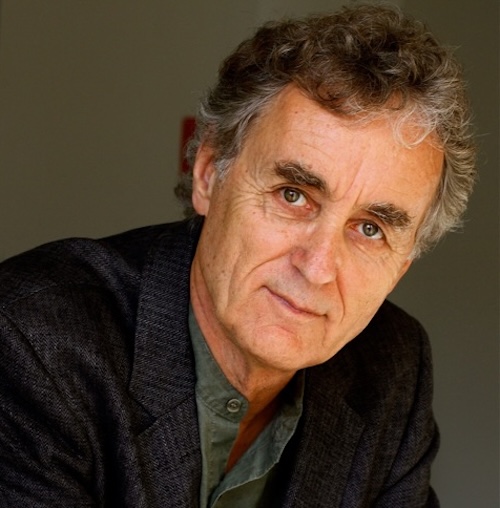
Fritjof Capra (born 1939) is an Austrian-born American physicist and systems theorist. His work examines connections between physics, biology, systems theory, and ecological philosophy. Born in …

George Sessions (1938-2016) was an American philosopher who co-developed the Deep Ecology Platform with Arne Naess. He taught philosophy at Sierra College in Rocklin, California for nearly fifty …

Aldo Leopold was an American forester, ecologist, and environmentalist whose concept of the “land ethic” revolutionized conservation thought. His posthumously published masterwork …
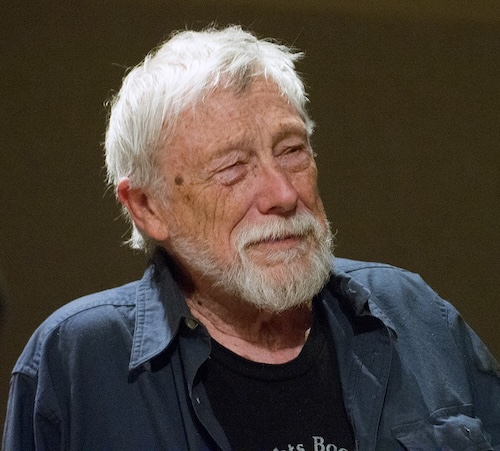
Gary Snyder (born 1930) is an American poet, Zen Buddhist practitioner, and ecological philosopher whose work integrates Beat poetry, Buddhism, and bioregionalism. His collection Turtle Island …

Rachel Carson (1907-1964) was an American marine biologist and nature writer whose 1962 book “Silent Spring” launched the modern environmental movement by revealing the devastating …

Mary Oliver (1935-2019) was an American poet whose accessible nature poetry examined attention to the natural world. Her work invited readers to observe closely the ordinary aspects of nature - …

Robinson Jeffers (1887-1962) was an American poet whose philosophy of “inhumanism” examined the non-human world and rejected anthropocentrism. Writing from his stone tower home in Big …

Brian Swimme is a mathematical cosmologist and cultural historian who examines the implications of modern cosmology for human meaning and purpose. Trained as a mathematician at the University of …

Edward Osborne Wilson (1929-2021) was one of the world’s leading biologists whose groundbreaking research on biodiversity, evolution, and human nature profoundly influenced both scientific …

Francis Weller is a psychotherapist, author, and ritual elder who examines connections between grief, ecological crisis, and community healing. Trained in depth psychology and influenced by …
Gregory Bateson (1904-1980) was an anthropologist, biologist, and cyberneticist whose groundbreaking work on systems thinking, learning theory, and the “ecology of mind” provided …

Thomas Berry (1914-2009) was a cultural historian, cosmologist, and self-described “geologian” who examined human-Earth relationships through the lens of both scientific cosmology and …

Robin Wall Kimmerer is a botanist, author, and distinguished professor at the State University of New York College of Environmental Science and Forestry. As an enrolled member of the Citizen …
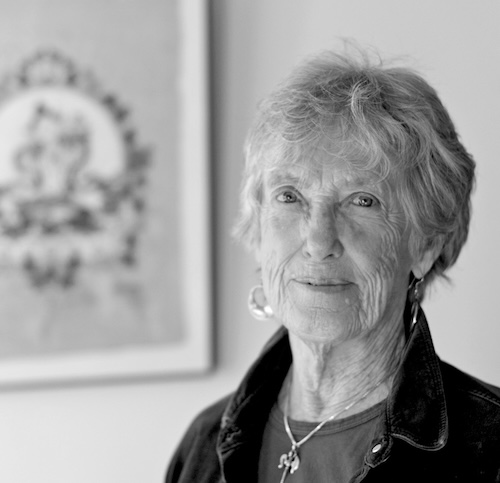
Joanna Macy (1929-2025) was a scholar of Buddhism, general systems theory, and deep ecology. Born in Los Angeles, she earned her PhD and spent five decades developing the Work That Reconnects, a …